Outdoor Lighting Design: A Technical Guide to Roadway, Area, and Floodlighting
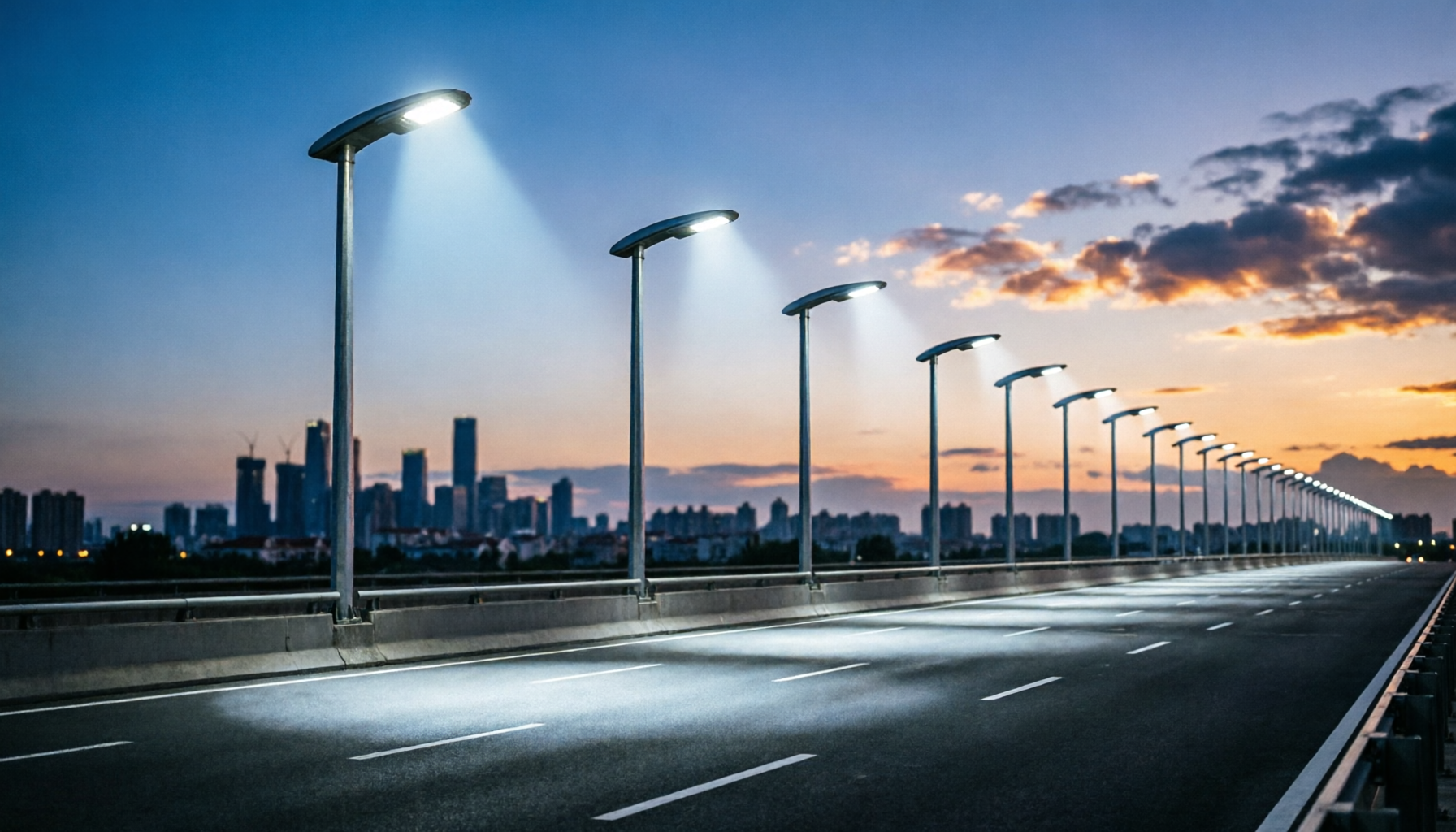
Outdoor Lighting Design: A Technical Guide to Roadway, Area, and Floodlighting – Performance, Glare Control, and Long‑Term Reliability
Outdoor lighting is far more than illuminating a dark space. It ensures safety for drivers and pedestrians, deters crime, enhances architectural aesthetics, and supports nighttime economic activity. Yet poorly designed outdoor installations are common: glaring luminaires that blind motorists, uneven illumination that creates dark spots, and fixtures that fail prematurely due to moisture ingress or lightning surges. For civil engineers, facility managers, and urban planners, specifying outdoor lighting requires a nuanced understanding of photometric distribution, optical control, environmental durability, and power quality – factors that are often overlooked in favour of simple wattage or lumen counts.
This guide covers the essential technical parameters for outdoor road, area, and floodlighting applications: optical beam patterns, uniformity ratios, glare metrics, colour temperature for different environments, ingress protection and mechanical strength, surge protection, and practical installation best practices. Whether you are designing a highway, a parking lot, a sports field, or a building facade, this article provides the engineering knowledge you need to avoid costly mistakes and deliver lasting performance.
1. Optical Distribution – Choosing the Right Beam Pattern for the Task
Outdoor luminaires are available with a variety of photometric distributions, defined by the Illuminating Engineering Society (IES) as Type I through Type V. Each suits a different geometry:
- Type I & II – Narrow, long, and oval patterns, ideal for roadways and walkways where light needs to be directed along a corridor.
- Type III – Medium‑width distribution, commonly used for larger roads, parking lots, and perimeter lighting.
- Type IV – Asymmetric, forward‑throw pattern, perfect for mounting on poles at the side of a wide area (e.g., highways and stadiums) where light must project across the space.
- Type V – Circular, symmetrical distribution, suitable for square or open areas like central plazas, intersections, and roundabouts.
Beyond the basic type, the beam angle (narrow, medium, wide) and cut‑off classification (full, semi‑cut‑off, or non‑cut‑off) determine how much light escapes above the horizontal plane. Full‑cut‑off luminaires are increasingly required by dark‑sky regulations to reduce light pollution and skyglow. When selecting, always ask for IES photometric files and use lighting simulation software (e.g., Dialux, AGi32) to verify that the proposed fixture achieves the required average illuminance and uniformity on the target surface.
2. Uniformity and Glare – The Two Sides of Visual Comfort
A well‑lit outdoor space must have two key metrics:
- Uniformity ratio (U₀) – the ratio of minimum illuminance to average illuminance. For roads, a U₀ of 0.4 or higher is typically required (e.g., EN 13201). For pedestrian areas, a value of 0.25‑0.3 may be acceptable. Poor uniformity causes dark patches where hazards are hidden, forcing drivers to over‑compensate.
- Glare rating – for roads, the threshold increment (TI) and longitudinal uniformity are monitored; for sports and area lighting, the Unified Glare Rating (UGR) or GR (Glare Rating) is used. High‑angle glare not only discomforts but reduces the visibility of obstacles. Selecting fixtures with sharp cut‑off optics, internal baffles, or visors can significantly reduce glare.
Many low‑cost outdoor lights use simple reflectors that scatter light everywhere, resulting in wasted upward light and high glare. A quality luminaire incorporates precision‑engineered lenses or multi‑faceted reflectors that direct light precisely where it is needed, improving both uniformity and efficiency.
3. Colour Temperature and Scotopic Sensitivity – Does CCT Matter Outdoors?
For outdoor applications, the choice of Correlated Colour Temperature (CCT) affects visibility, safety, and even wildlife behaviour.
4000‑5000K (neutral to cool white) is commonly used for roads and security lighting because it enhances contrast and increases perceived brightness at lower lux levels due to higher scotopic/photopic (S/P) ratio. Studies show that at the same photopic lumens, a 5000K source can appear brighter and improve peripheral detection, allowing for lower wattage while maintaining safety.
3000K (warm white) is often specified for residential areas, historic districts, and parks to create a welcoming, non‑intrusive atmosphere and reduce light pollution. Warm light also has less blue‑rich content, which is less disruptive to nocturnal insects and birds.
For high‑mast lighting or large area floodlights, 4000‑5000K is generally recommended for functional tasks, but always consider local light pollution ordinances – some jurisdictions cap CCT at 4000K or require full cut‑off shielding. An experienced supplier will discuss these trade‑offs with you rather than simply recommending one CCT.
4. Ingress Protection (IP) and Mechanical Strength – Weatherproofing Essentials
Outdoor luminaires are exposed to rain, snow, dust, extreme temperatures, and physical impact. The IP rating must match the installation environment:
- IP65 – dust‑tight and protected against low‑pressure water jets; suitable for most sheltered outdoor locations (under eaves, on building facades).
- IP66 – protected against powerful water jets and heavy seas; ideal for exposed pole‑mounting, coastal areas, and locations subject to power‑washing.
- IP67 – temporary immersion up to 1 metre; recommended for flood‑prone areas or tunnel entrances.
- IP69K – high‑pressure, high‑temperature water jet resistance; rare for general lighting but required in extreme washdown zones (e.g., food processing yards).
Beyond ingress protection, consider IK rating for impact resistance. For ground‑level bollards or low‑mounted lights in parking areas, an IK10 (20 joules) rating is prudent to withstand vehicle or trolley impacts. For pole‑mounted luminaires, IK08 or IK09 is sufficient. Always check that the lens material – usually tempered glass or polycarbonate – is UV‑stabilised to prevent yellowing and cracking over years of sun exposure.
5. Surge Protection and Driver Reliability – Defending Against the Grid
Outdoor lighting circuits are particularly vulnerable to lightning strikes and switching transients. A direct or nearby strike can send a surge through the mains, destroying the LED driver – often the most expensive component. To ensure long‑life, look for luminaires with:
- Built‑in surge protection device (SPD) rated for at least 10kV/5kA (combination wave) for the power line, and even higher for overhead cabling.
- Driver with wide input voltage tolerance (e.g., 110‑277V AC or 200‑480V AC) to accommodate grid fluctuations.
- Class I or Class II insulation depending on earthing availability.
Some high‑end drivers include auto‑recovery after a surge, so the light restarts when power returns. This feature can save significant maintenance costs in storm‑prone regions. Always ask for the driver's declared surge protection level – if it is not specified, assume minimal protection.
6. Practical Installation and Maintenance Considerations
Even the best outdoor luminaire will underperform if not installed correctly. Here are some field‑proven tips:
- Mounting height and spacing – For roads, the mounting height is usually 8‑12 metres for side‑entry poles, with spacing of 3‑5 times the height depending on the photometric distribution. For area floodlights, use the inverse‑square law and beam angle to calculate coverage; always verify with a photometric plan.
- Tilt angle – Incorrect tilt can waste light and increase glare. Use the manufacturer's aiming tables or a digital inclinometer to set precise angles.
- Cable sizing – Voltage drop in long cable runs can reduce driver input voltage below the minimum, causing flicker or premature failure. Calculate cable cross‑section based on load and distance.
- Maintenance access – For high‑mast or difficult‑to‑reach locations, choose luminaires with tool‑less entry and modular components (e.g., replaceable driver and LED boards) so that repairs can be done quickly without replacing the entire fixture. This reduces downtime and spare part costs.
Common Mistakes in Outdoor Lighting Specification
From our site audits and project reviews, these pitfalls are recurring:
- Overlooking maintenance cost – A cheap fixture with a 3‑year warranty may require replacement every 2‑3 years; a high‑quality fixture with a 10‑year warranty and better thermal design can last 50,000+ hours, drastically reducing labour and equipment rental costs.
- Ignoring light pollution regulations – Many municipalities now enforce strict cut‑off criteria. Non‑compliant fixtures may require costly retrofits or fines.
- Neglecting seasonal changes – In winter, snow accumulation on lenses can block light output. Select lenses with an anti‑adhesion coating or consider heated versions for extreme climates.
- Mismatched colour temperature across batches – Different batches from a supplier may have slight CCT variations. Ask for consistent binning and tolerance (±150K) to avoid patchy colour in a large installation.
- Underestimating wind load – Large floodlights on high masts must have adequate aerodynamic design and certified wind resistance; lightweight housings can warp or detach under high winds.
Conclusion – Elevate Your Outdoor Lighting with Data‑Driven Engineering
Outdoor lighting is a long‑term investment in safety, security, and visual comfort. The initial price per fixture is only a small fraction of the total lifetime cost – maintenance, energy consumption, and performance stability dominate the financial equation. By carefully evaluating optical distribution, glare control, colour metrics, ingress protection, surge immunity, and installation geometry, you can select luminaires that deliver consistent, reliable light for years while keeping operating expenses low.
At Anhui Lights Lighting Technology Ltd., we approach outdoor projects with the same thoroughness. We do not simply sell a luminaire – we collaborate with you to understand your site layout, lighting standards (e.g., CIE, EN, IESNA), environmental challenges, and local regulations. Our engineering team provides detailed photometric simulations, surge protection assessments, and thermal analysis to ensure that every fixture we recommend performs exactly as specified. We also offer on‑site commissioning support to verify aiming angles and illuminance levels after installation.
If you are planning a roadway upgrade, a parking facility, a sports complex, or an architectural floodlighting project, we invite you to share your site plans and performance goals. Our experts will prepare a no‑obligation proposal including multiple optical options, energy‑saving projections, and a clear comparison of product tiers – so you can make an informed decision based on data, not marketing hype.